
Reading the Status Light Codes on a Modern Water Heater
May 8, 2026 — Burleson, TX
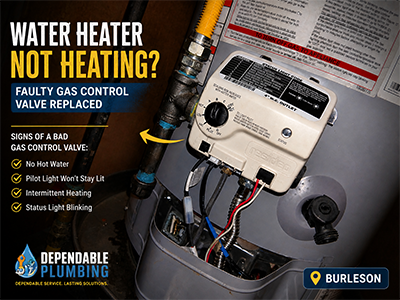
If you’ve replaced a water heater in the last decade or so, you may have noticed a small light blinking on the front of the gas valve. That light isn’t decoration. It’s a built-in diagnostic system that tells homeowners and technicians what’s going wrong inside the unit before anyone has to take it apart.
Why Modern Water Heaters Have Status Lights
Older water heaters were simple appliances. A pilot, a burner, and a mechanical thermostat — if anything went wrong, you found out by running out of hot water and calling a plumber. There was no way to narrow the problem down without hands-on testing.
Newer gas water heaters added an electronic gas control valve that monitors temperature, pilot stability, flame quality, and a handful of other signals. When something falls outside the expected range, the valve flashes a fault code on the status light. The flash count points to the specific problem — and that single piece of information can save an hour of diagnostic work and a service call’s worth of guesswork.
How the Codes Work
The label on the front of the gas valve lists the flash counts and what each one means. Exact codes vary slightly by manufacturer, but most modern gas water heaters use a similar pattern:
- One slow flash every few seconds — normal operation; nothing wrong
- Two flashes — thermopile voltage low; pilot may be weak or the thermopile is failing
- Three flashes — slow water heating sensor issue, often related to the temperature probe
- Four flashes — high-temperature shutdown; the unit detected water hotter than the safety threshold
- Five flashes — sensor failure; the temperature sensor isn’t reading correctly
- Six flashes — gas control valve fault; the valve itself has failed and usually needs replacement
- Seven flashes — flame sensor issue; the unit can’t confirm the burner is actually firing
- Eight or more flashes — chamber sensor or burner-related fault, depending on the brand
The full chart is printed right on the valve label. If you’ve never noticed it, take a flashlight to the water heater and look — it’s usually right next to the temperature dial.
Codes a Homeowner Can Reasonably Address
Some codes point to issues that are worth checking yourself before calling a plumber:
- If the pilot is out, relight instructions are printed on the same panel as the status code chart. Following them carefully resolves a fair number of “no hot water” situations on its own.
- If the air intake screen at the bottom of the unit is clogged with dust, lint, or pet hair, cleaning it can clear an air-related fault. The unit needs clean combustion air to fire correctly.
- If the unit was recently bumped or had work done nearby, a loose connection on the thermopile can throw a low-voltage code. Reseating the connection sometimes resolves it.
Codes That Mean You Need a Plumber
Other codes point to component failures that need professional repair:
- A gas control valve fault almost always means the valve itself needs replacement. It isn’t a part you can rebuild in place.
- Repeated high-temperature shutdowns can indicate a failing thermostat, sediment-clogged tank, or stuck dip tube — any of which need diagnosis.
- Flame sensor faults often involve the burner assembly itself, which means pulling the burner and inspecting the chamber.
- Any code accompanied by a gas smell, water around the base of the tank, or visible scorching is an immediate “shut off the gas and call a plumber” situation.
Why It Matters in DFW Homes
Hard water is a fact of life in North Texas, and sediment buildup inside water heaters is one of the more common reasons newer units start throwing fault codes. A tank that should comfortably last 12 to 15 years can shorten its own life by years if it’s never flushed. The status light is often the first indicator that something inside the tank has changed — long before a homeowner notices anything from the tap.
Paying attention to that little blinking light is one of the simplest things a homeowner can do to keep a water heater healthy. The information it gives is free; using it just takes a flashlight and 30 seconds.
When You Need a Plumber
If your water heater is throwing a fault code that points to a gas valve, sensor, or burner issue — or if you’ve tried the homeowner-level checks and nothing has changed — the next step is a service call. Reach out to Dependable Plumbing through our directory contact form and they’ll get you on the schedule.